Product histories are usually told as a sequence of launches. That leaves out the working products that create real learning and are deliberately stopped. V1 is one of those products.
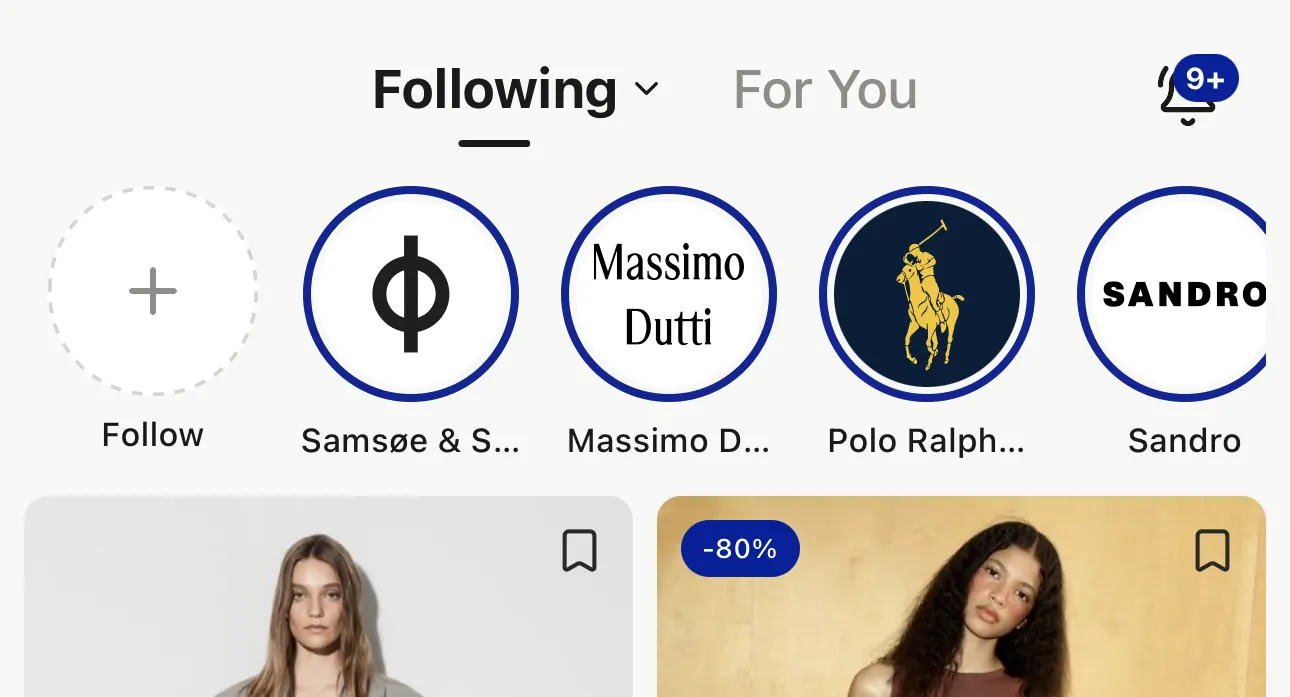
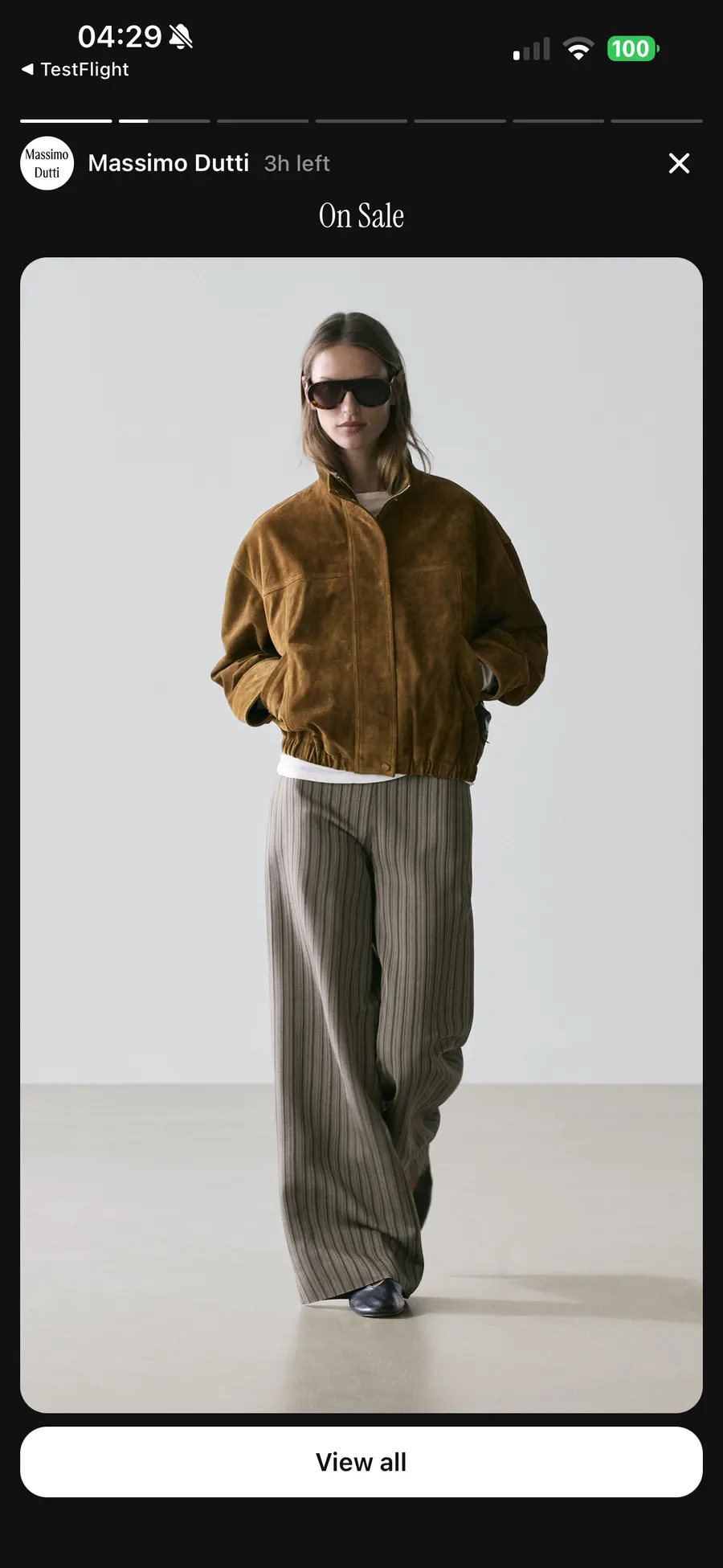
The pilot tested a clear hypothesis: fashion discovery could feel more immediate if products and brand communication were brought into formats people already understood. V1 opened on Following and For You feeds, placed story-style brand updates above an endless visual product grid and let people save products into collections.
A dedicated brand page connected sale items, new arrivals and saved products, while the purchase still happened with the source brand or retailer. These were not isolated prototypes. They formed a visually consistent, substantial mobile product with several ideas that still feel novel together.
Inside the V1 pilot
A product with several doors and no obvious entrance
The most useful feedback we heard was simple: it was unclear what the app did or how to use it. A new user could scroll For You, follow brands, open Stories, browse a brand page or start saving products. There was no single action that explained how those pieces belonged together.
Each surface made sense on its own. Together, they competed to define the product. The feed suggested Favora was a place to browse continuously. Stories suggested it was a new way to follow brands. Collections suggested it was a place to build and keep something personal.
The problem was not the quality of the individual ideas. It was the hierarchy between them. V1 offered several good answers to the question “what can I do here?” without giving one clear answer to “what is this app helping me create?”
Collections provided a clearer answer
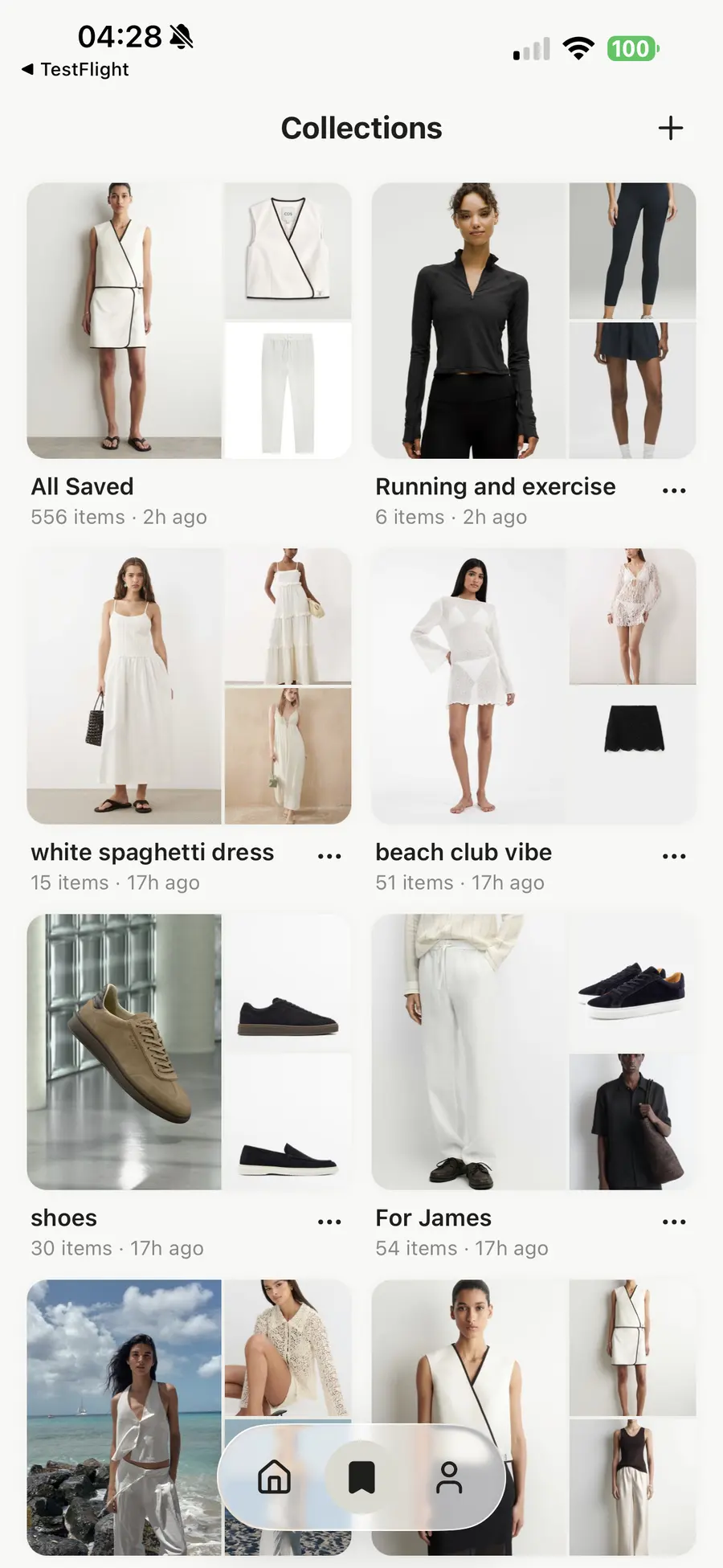
A collection turns discovery into an outcome a person owns. Products from different brands can be saved around an occasion, a silhouette, an activity or an idea, then revisited and refined. The value remains after the feed closes.
V1 already had collections, including an automatic All Saved collection and user-created groups. But they lived as one destination beside the feed and profile. The rest of the product did not clearly lead towards them, so their role was easy to miss.
The feedback changed the product question. Instead of asking how many discovery formats Favora could bring together, we asked what every discovery surface should help the user build. Collections gave us the clearest answer.
A small test, not market validation
We did not launch this version publicly. It remained a TestFlight pilot with a small, hyper-local group, designed to gather input and challenge assumptions before a larger release. We do not treat that cohort as statistical validation or retrofit broad market claims onto it.
By the most direct measure, V1 failed to become a public product because it did not earn a wider launch. That is not a result we want to disguise. A product test is valuable when it makes the next decision clearer, including the decision to stop.
The quality and completeness of the package made that decision more useful, not less. We were not rejecting a sketch. We were learning from a product people could actually use, and choosing not to solve its unclear purpose with more onboarding copy or another feature.
Version 2.0 put collections at the centre
Version 2.0 made a committed choice: collections would be the centre of Favora. A product discovered through Daily Picks can be saved into a collection. Products found through search or browsing can join the same place. The collection becomes the durable layer that connects discovery over time.
That focus also makes the app easier to understand. The first action has a destination, and every saved product adds to something visible and personal. Daily Picks provides a finite way to discover. Collections provide the reason to return, organise and continue an idea.
The change came quickly. V1’s feed and Stories were still being assembled in late April. Version 2.0 followed in late May with a different centre of gravity. V1 gave Favora a strong product package. The pilot gave us the clarity to simplify it.
V1 did not become the app Favora launched, but several of its ideas helped reveal what the next version needed. Sharing it now is a record of that iteration, and of a principle we intend to keep: a product becomes clearer when its strongest ideas serve one purpose rather than compete to define it.