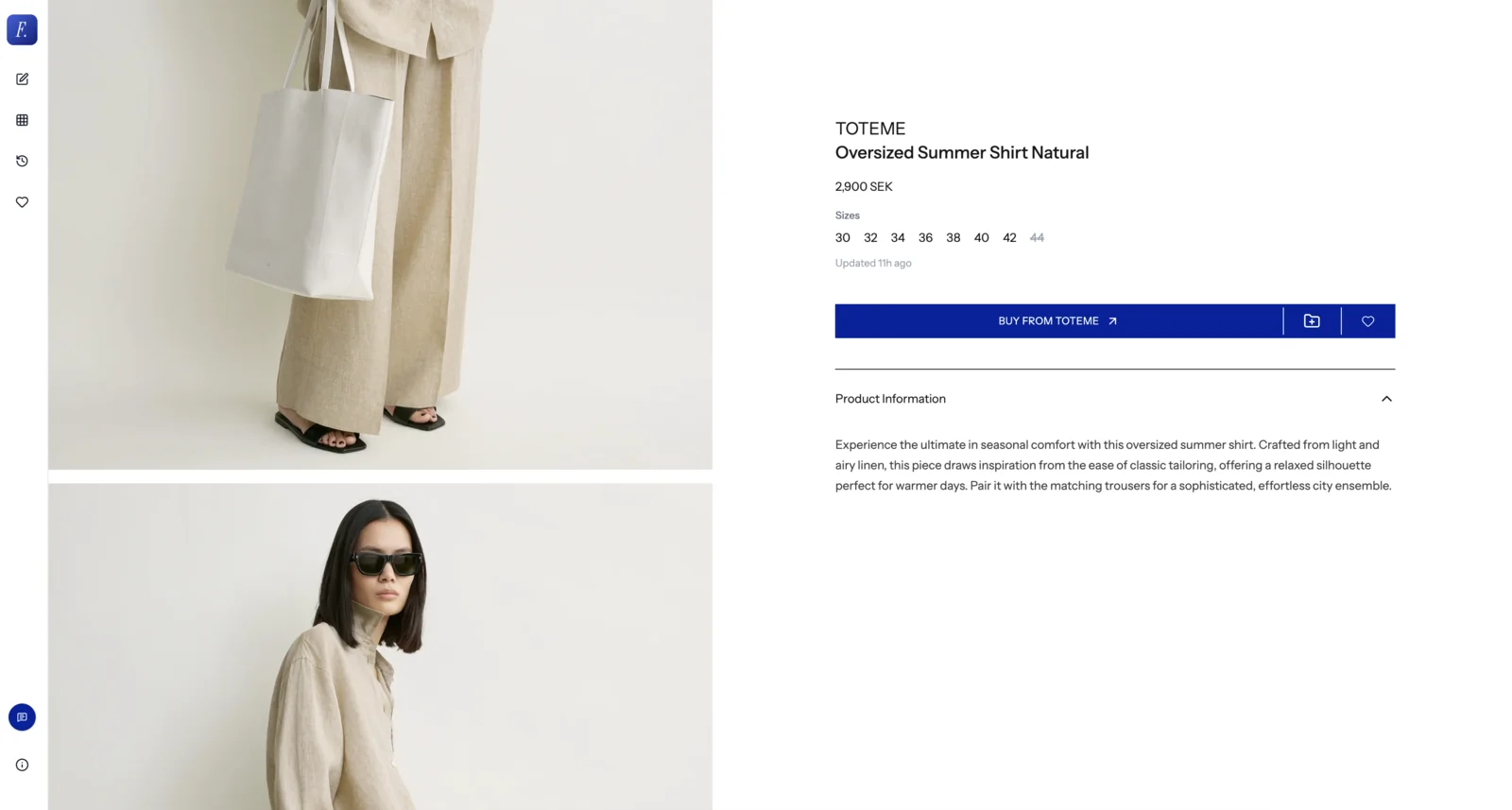
The new browsing surfaces extend Favora beyond query-led search. A shopper can now open a dedicated brand page, scan recently added products or look specifically at reduced-price items without moving through separate retailer sites first.
That wider view can resemble a marketplace, but the operating model is different. Marketplaces are organised around a shared transaction. Favora is organised around discovery and referral: it helps shoppers compare what is available across stores, then directs them to the source merchant.
One index, many storefronts
Favora structures product information from brand and retailer pages into a common format for search and visual browsing. Details such as brand, title, price, colour, size, availability and source URL can then be compared across catalogues.
Every result retains its source. The purpose of the index is to make distributed fashion catalogues easier to explore, not to detach products from the businesses that sell them.
The purchase stays with the retailer
When someone chooses a product, Favora sends them to the brand or retailer. The merchant remains responsible for the canonical product page, checkout, payment, shipping, returns and customer service.
Favora does not sell products directly, hold inventory, process payments or fulfil orders. For shoppers, that means broader discovery without an unfamiliar shared checkout. For merchants, it means the purchase and customer relationship stay at the source.
Coverage is not partnership
Favora can index product information from publicly reachable pages. A brand or product appearing in Favora does not by itself mean that the brand has a commercial relationship with, sponsors or endorses Favora.
Commercial partnerships are separate and optional. This separation lets Favora organise a useful cross-store view while making the origin of every product clear. It also gives brands a straightforward distinction between discoverability in the index and a direct commercial relationship with Favora.